
Interest Rates Get Headlines. Demographics Drive Results
Every conversation about real estate eventually turns to interest rates. When will they drop? How much? What does it mean for affordability? These are fair questions — but according to some of the biggest names in housing, they're not the right ones to anchor a long-term investment thesis on. At Walker & Dunlop's Summer Conference this week, top CEOs agreed on one thing: the future of housing demand will be shaped less by today's rate environment and more by long-term demographic shifts. As PulteGroup's Ryan Marshall put it, "We talk about where the jobs are going, because ultimately, population follows the jobs."For investors trying to understand where to put capital, that's the frame that matters.
Where People Are Actually Going
A new report from Placer.ai confirms that while the pandemic-era migration boom has cooled, domestic migration continues to reshape local economies and housing markets. The headline-grabbers are Florida and Texas — but the underlying message is the same across all the growth markets: people are still moving, and where they land determines where housing demand lives.Arizona has been on the right side of that equation for years, and the numbers still back it up.
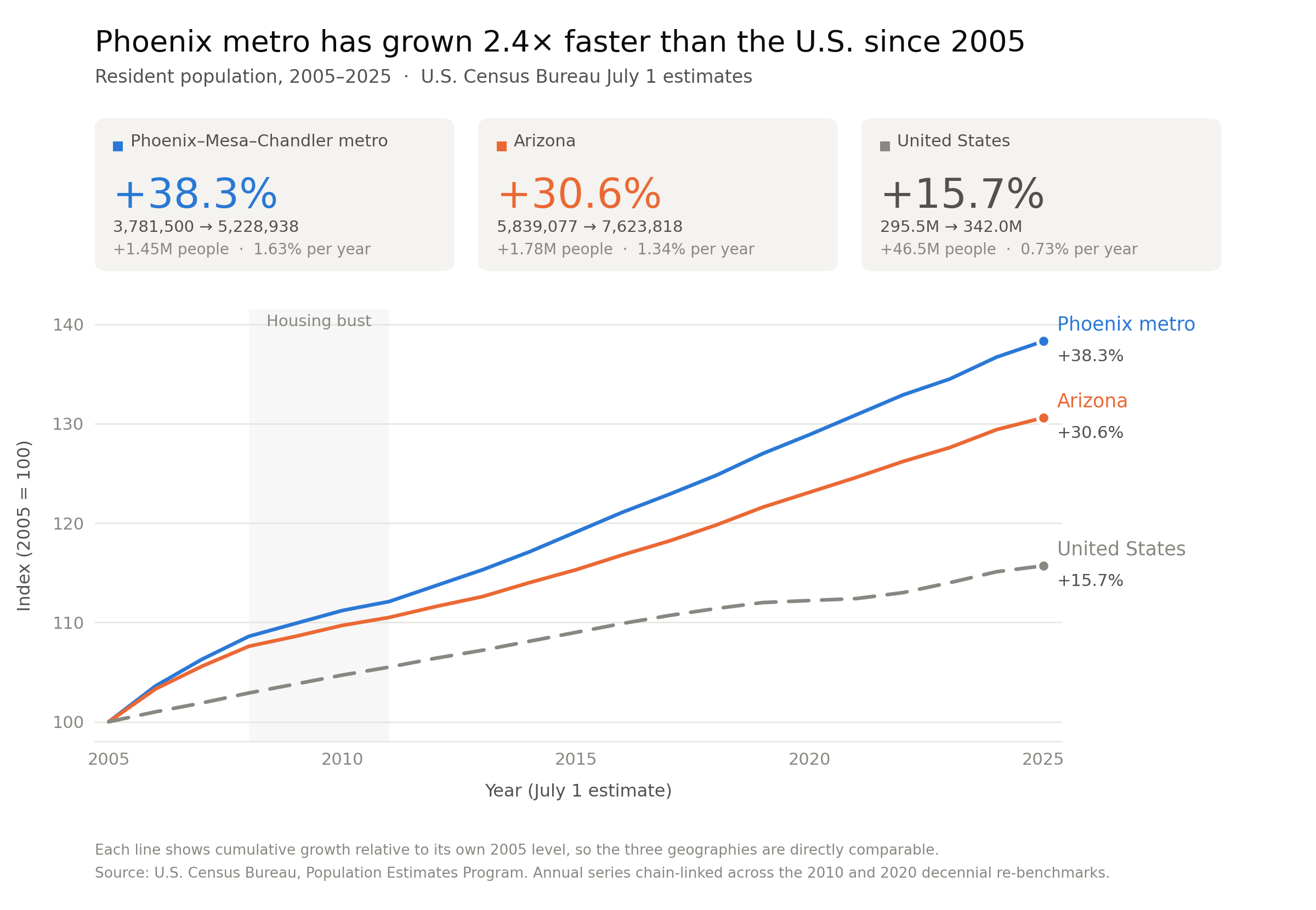
Arizona's Population Story
As of mid-2025, Arizona's population stood at 7.6 million, growing at 1.3% annually — above the national average. The Phoenix metro alone added 59,000 residents in 2025, reaching 5.2 million people and ranking fourth in the country for numeric population growth. That's not a blip. Since the 2020 Census, 97% of Arizona's population surge has come from net migration — people choosing to come here.Looking ahead, Arizona is projected to add more than 2 million residents by 2060, growing from 7.7 million to nearly 9.8 million. That's a 26% increase over the next three and a half decades, driven by affordability relative to coastal markets, a growing job base, and a quality of life that continues to attract transplants from California, Illinois, and the Northeast.
What This Means for Multifamily
New residents don't buy on arrival — they rent. The 59,000 people who moved to the Phoenix metro last year represent sustained, structural demand for apartments that has nothing to do with where the Fed sets rates. When a market is adding that kind of population year over year, multifamily isn't a bet on a rate cycle. It's a bet on people — and people keep coming.Short-term market cycles create noise, but demographic momentum creates opportunity. Arizona's demographic momentum is one of the strongest in the country.
About the author
Neighborhood Ventures